
June 9, 2026
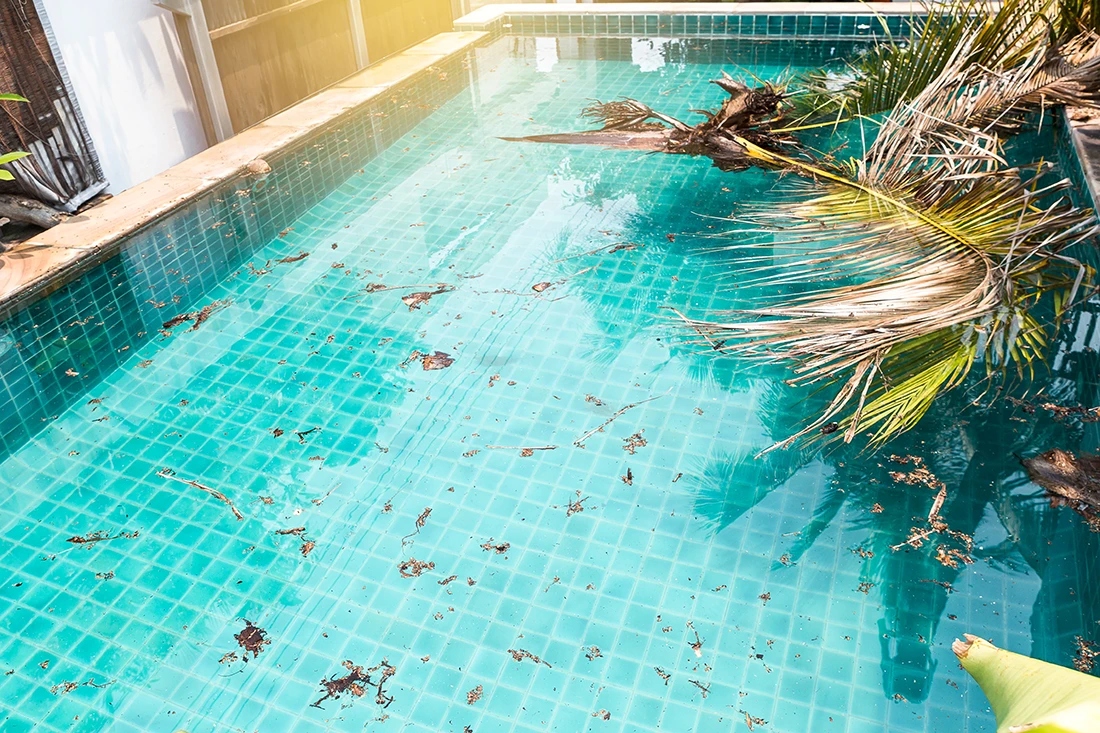
Hurricane pool prep in South Florida is part of owning a pool anywhere from Jupiter to Fort Lauderdale. Hurricane season runs June 1 through November 30, and if you own a pool anywhere from Jupiter to Fort Lauderdale, your pool is part of your storm plan whether you’ve thought about it that way or not. The good news: protecting it is straightforward if you do the right things in the right order — and avoid the one mistake that causes the most expensive damage. Here’s the guide we give our own clients.
Hurricane pool prep: what to do before the storm
Do NOT drain your pool. This is the single most costly hurricane-prep mistake in South Florida. With our high water table, an empty or low pool can literally float out of the ground or crack from hydrostatic pressure during heavy rain. Leave the water in — the weight is protecting the shell.
- Lower the level only slightly. Drop the water 1–2 feet at most to accommodate heavy rainfall and runoff, no more.
- Balance and super-chlorinate (shock) the water. Storm debris, runoff, and days without filtration invite algae. Shocking beforehand and adding extra chlorine or an algaecide buys you a cleaner recovery.
- Do not cover the pool. A cover will be shredded by flying debris and can trap and damage equipment. Leave it open.
- Remove and store loose items. Furniture, toys, solar lights, planters, and anything that can become a projectile should go inside the garage or house — not in the pool, despite the old myth.
Protecting your equipment
Your pump, filter, heater, and automation panel are the most expensive things to replace, and they’re vulnerable to both flooding and power surges.
- Turn off power at the breaker to the pool equipment before the storm arrives to protect against surges and prevent the pump from running dry.
- Wrap the pump and motor in waterproof plastic and secure it — but never seal a wet motor, which can trap moisture.
- If flooding is expected, disconnect and elevate portable equipment where possible. Submerged motors and heaters often need full replacement.

If you have a screen enclosure
Screen enclosures are everywhere from Wellington to Port St. Lucie, and they’re designed to fail in a controlled way. Many panels are built to pop out under extreme wind to relieve pressure and save the aluminum frame — do not tape or reinforce them shut, which can cause the whole structure to collapse. Clear the enclosure of anything loose and trust the engineering.
After the storm: safe recovery
- Don’t turn equipment back on while flooded. Wait until water recedes and have a professional inspect any submerged motor or panel before restoring power.
- Remove large debris by hand or net before running the filter, so you don’t clog or damage the system.
- Restore the water level, then rebalance chemistry and run the filter continuously for 24–48 hours to clear the water.
- Watch for the green pool. Days without circulation plus warm water equals algae; shock again if needed and brush the surfaces.
| A quick word on safety Never enter pool equipment areas that are flooded or near downed power lines, and don’t swim until the water is properly balanced and clear — cloudy post-storm water can hide debris and bacteria. When in doubt after a major storm, a quick professional inspection is far cheaper than a replaced pump or a liability claim. Contact us if you need help. |
Key takeaways
After the storm, clear debris, rebalance, and filter continuously to prevent algae.
Never drain your pool — South Florida’s water table can float or crack an empty shell.
Lower water only 1–2 feet, shock the water, and remove loose items; don’t cover the pool.
Cut power to equipment and protect the pump; never run or re-energize a flooded motor.