
June 9, 2026
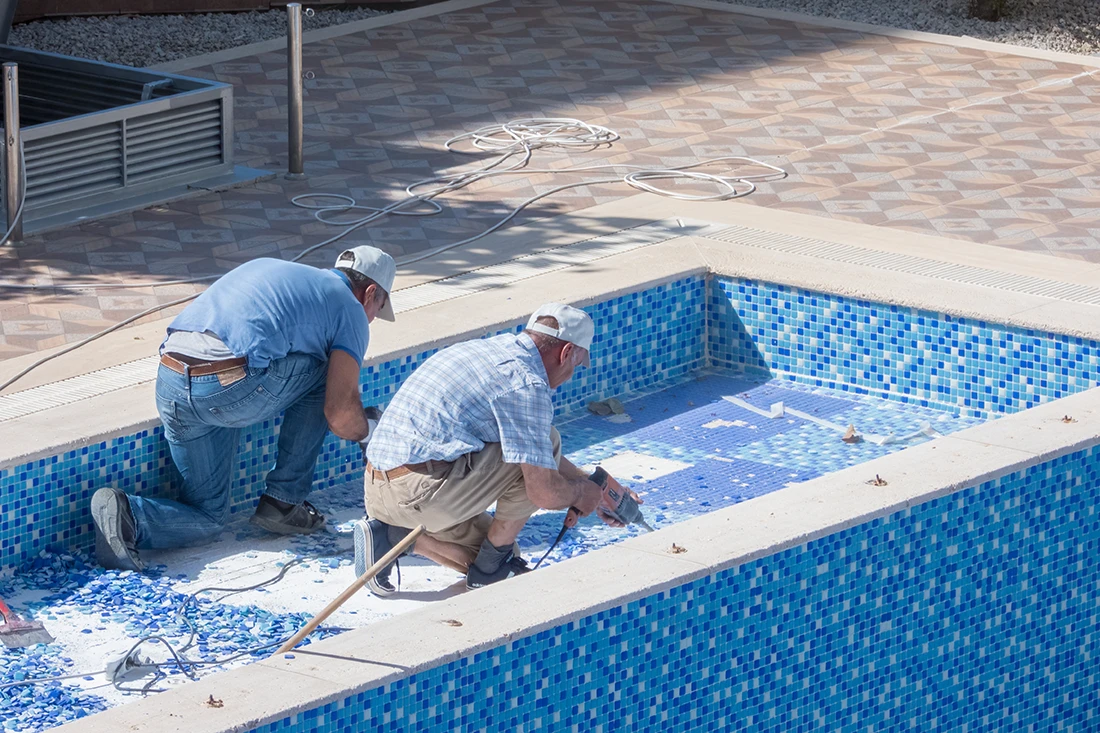
How long it takes to build a pool in South Florida is one of the first questions we get. Here’s the answer most pool companies won’t give you straight: from signed contract to your first swim, a custom pool in South Florida usually takes three to six months (after permitting is complete). The rest is engineering, permitting, and inspections. The physical construction — the part with crews in your backyard — is often only 8 to 12 weeks of that. During most of this process, you won’t have crews in your backyard.
We’d rather you hear the real timeline now than feel misled in month four. So let’s break it down by what actually happens, and where the clock really runs. Check out our process.
How long permitting takes to build a pool in South Florida
Permitting is the single most variable stage, because it’s the one part of the process no builder fully controls. Approximate windows for 2026:
- Broward County (Fort Lauderdale, Coral Springs, Parkland): online plan review often targets around 10 business days, but during busy periods the full permit can stretch to four to ten weeks.
- Palm Beach County (West Palm Beach, Wellington, Boca Raton, Jupiter): rarely a straight line — multiple departments and overlapping reviews commonly put it in the four to ten week range, longer in coastal or HOA-heavy areas.
- Martin County (Stuart, Palm City, Jensen Beach): smaller volume can mean smoother reviews, but environmental and septic considerations near the water can add time.
- St. Lucie County (Port St. Lucie, Fort Pierce, Tradition): generally moderate timelines, with HOA and municipal layers in master-planned communities adding a step.
County permit timelines are published through each municipality’s building department.
Add an HOA architectural review on top of any of these — common in Wellington, Parkland, and Tradition — and you can add two to four more weeks before the county ever sees the plans.
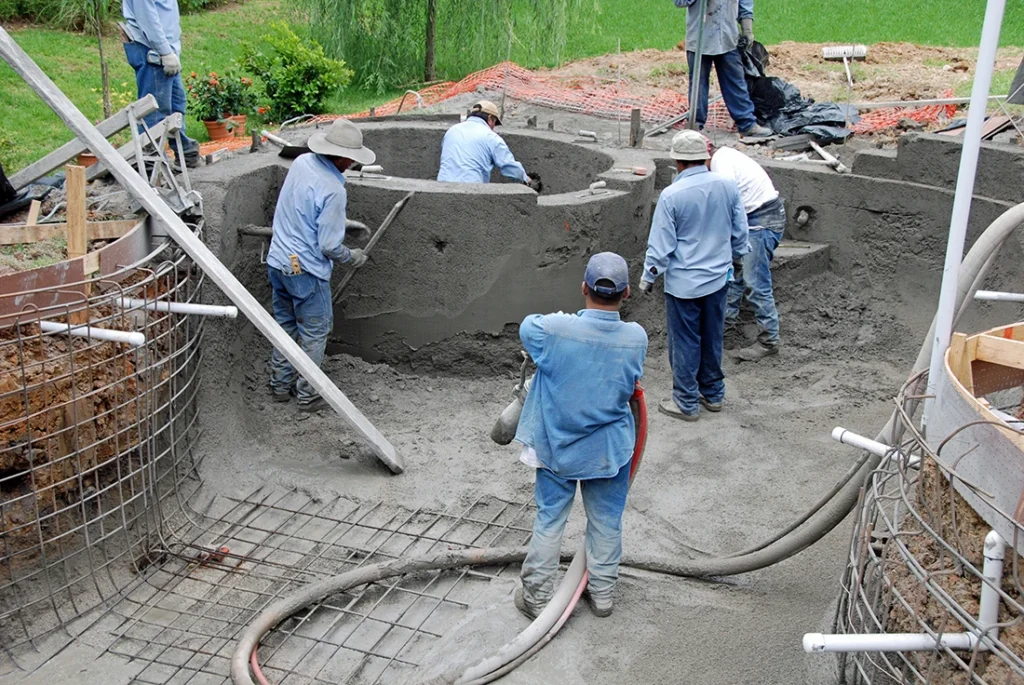
The eight phases of a pool build
- Design & contract — finalize layout, finishes, and scope (1–3 weeks).
- Engineering & permitting — structural plans submitted and approved (see county ranges above).
- Layout & excavation — the hole is dug; dramatic and fast (a few days).
- Steel, plumbing & electrical rough-in — rebar cage and lines installed, then inspected (1–2 weeks).
- Gunite/shell — the concrete shell is sprayed and must cure (1–2 weeks).
- Tile & deck — waterline tile and decking installed (1–3 weeks).
- Interior finish — pebble or plaster applied (about a week, plus curing).
- Equipment, fill, startup & final inspection — the pool is filled, balanced, and signed off (1–2 weeks).
What actually affects your timeline
Weather is the obvious one — South Florida’s summer rains and hurricane season (June through November) can pause excavation and gunite work. But the bigger, quieter delays come from inspection scheduling, material lead times on imported tile and equipment, change orders mid-build, and the most overlooked factor of all: how many other jobs your builder is juggling.
| What other pool companies won’t tell you Each construction phase in South Florida requires a passed inspection before the next can begin — a project legally cannot skip ahead. That means the difference between a 3-month and a 6-month build is rarely the crew’s speed; it’s how tightly someone schedules inspections and manages the gaps between phases. At Craft Master, that day-to-day coordination is a named person’s job, not an afterthought — because the calendar is where most pool projects quietly fall apart. |
Key takeaways
Weather, material lead times, and an overbooked builder are the most common timeline killers.
Plan for 3–6 months total; active construction is typically 8–12 weeks.
Permitting is the biggest variable — 4–10 weeks depending on county and HOA review.
Every phase requires a passed inspection before the next begins; the gaps between phases are where delays hide.